

Soft play can be safe for babies when it is age-appropriate, set up properly and used under close adult supervision. The main concerns are not usually the idea of soft play itself, but poor product choice, unstable layouts, worn materials and confusion between play equipment and sleep surfaces. NHS states that babies should sleep on a firm, flat mattress in a separate safe sleep space, so mats, ball pits and foam shapes should be treated as play items only.
Is soft play safe? The sensible answer is yes, with limits. A simple floor mat can support tummy time, reaching, rolling and early movement. A more advanced setup, such as stacked shapes or a ball pool, needs more judgement. What works well for one baby may be unsuitable for another only a few months younger.
Is soft play safe for babies?
Used sensibly, soft play gives babies a cleaner, softer and more forgiving area for supervised play than a bare hard floor. It can help with early motor development by giving them space to stretch, roll and explore textures.
That said, safety depends on four basics:
-
The baby’s developmental stage
-
The quality of the product
-
The stability of the setup, and
- The level of supervision
The safest version of home soft play is often the simplest one. A firm mat on a stable floor is very different from a small indoor climbing arrangement.
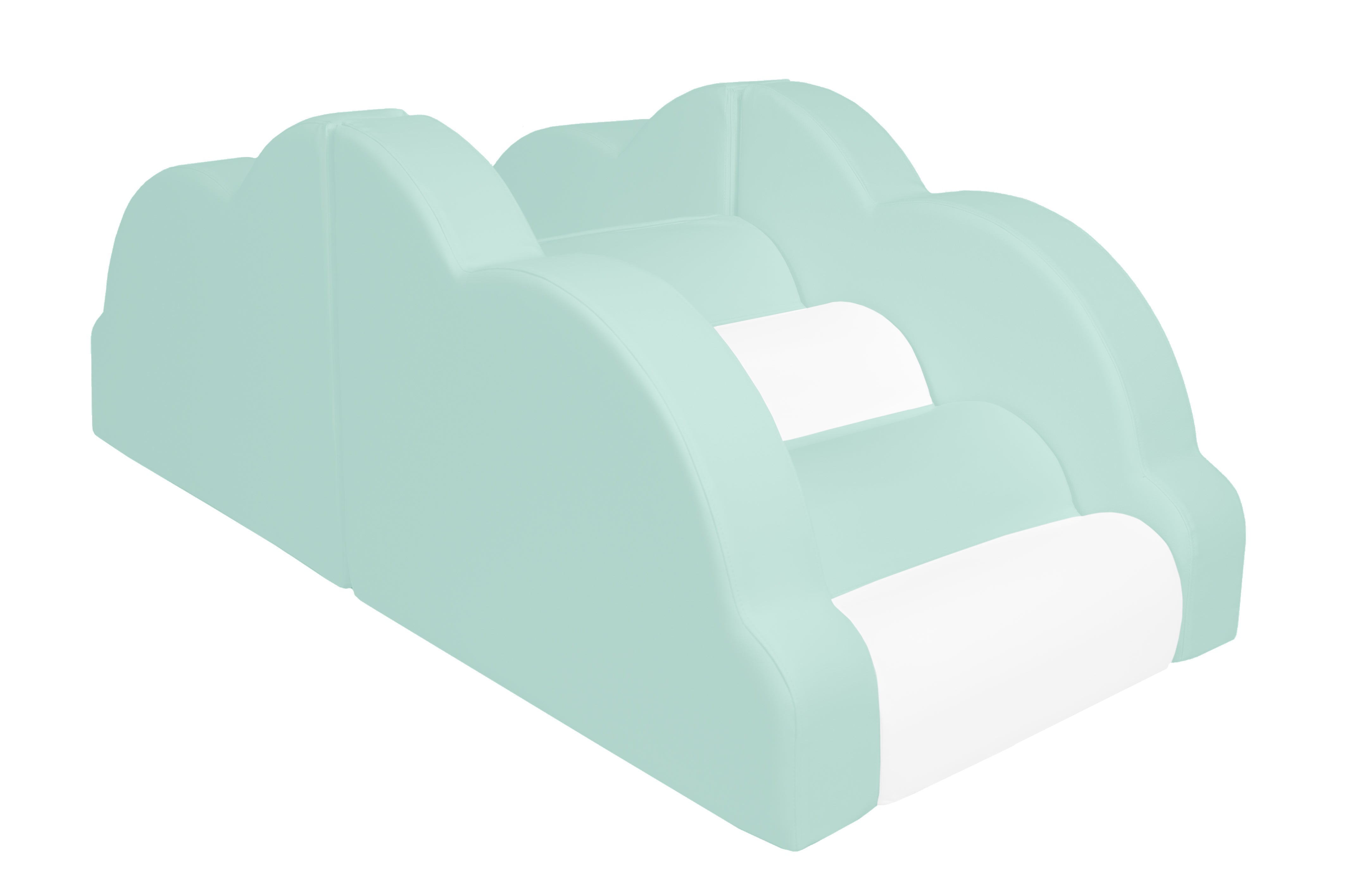
Rayne’s Baby World sells a wide range of soft play products, from tumble mats to step-and-slide sets and ball pools. Those products may be relevant for families building a home play area, but they should be chosen in line with age and use, not simply because they look attractive in a nursery or playroom.
A practical home safety checklist
Remember these soft play safety tips before each session:
1. Read the product description carefully. Look for clues about intended age, use and setup.
2. Place equipment on a flat surface. Avoid uneven rugs or slippery flooring where pieces can shift.
3. Choose firm, supportive mats. A play mat should cushion movement without letting the baby sink in.
4. Inspect covers and seams. Stop using any item with damage, exposed fastenings or breaking foam.
5. Clear the surrounding area. Remove cords, cups, chargers, sharp corners and small objects.
6. Keep the setup simple. One good mat often serves a baby better than several awkward pieces.
7. Stay close throughout. Babies should not be left to use soft play equipment unsupervised.
8. Treat all soft play as play only. If a baby falls asleep, move them to a proper sleep space.
9. Clean and dry regularly. Wipe surfaces and check that moisture has not collected inside covers.
10. Review the setup as your baby changes. Rolling, sitting and crawling each bring different risks.
How to choose the best mats and starter items
When you are looking for the best baby play mats, remember these questions.
- Is the mat stable on your flooring?
- Is it easy to wipe?
- Can you inspect it easily?
- Does it fit the room without forcing furniture too close to the baby’s play area?
The most relevant starting point would be the tumble mats range rather than larger climbing or slide bundles.
For a young baby, a mat is usually the better first choice. A ball pool or climbing set may suit later stages, but only when the baby is ready and an adult is actively supervising.
For a broader look at how soft play can support your child’s development at each stage, read our pillar guide, From Tummy Time to First Steps: An Age-by-Age Guide to Soft Play for Baby and Toddler Development (Plus Safety + Setup Tips).

When soft play is not a good idea
Soft play is not a good choice when the baby is too young for the equipment, when the products are damaged, when the room cannot be watched properly, or when anyone is tempted to let the baby sleep there. It is also a poor fit if older children are charging through the same area. In many homes, the safest arrangement is the least elaborate one: a firm mat, enough clear space and an adult nearby.
Creating a safe soft play area at home starts with simple choices: the right mat, age-appropriate equipment and close supervision. Explore Rayne’s Baby World to find practical soft play products that can help you build a safer, more comfortable space for your baby.
Frequently Asked Questions:
1) Are soft play mats safe for new borns?
Yes, if they are used for awake, supervised floor time and not as a sleep space. A new born does not need climbing pieces, steps or a ball pit. What they need is a clean, firm surface for short periods of stretching, tummy time and interaction with an adult. The mat should lie flat and stay in place. If the baby drops off, they should be moved to a cot, crib or Moses basket with a firm, flat mattress.
2) At what age can babies use a ball pit?
There is no single age that suits every baby because development varies. A baby who can sit steadily and tolerate shifting surfaces may enjoy a small, supervised ball pool more than a younger baby who still needs a very stable base. Parents should judge readiness by balance, control and close supervision rather than by appearance alone.
3) Can babies sleep on a play mat during the day?
No. Even if the baby seems settled and you are nearby, a play mat or foam play surface is not a substitute for a safe sleep space. Babies are safest on their back on a firm, flat mattress in a clear sleep area. That advice applies to naps as well as night-time sleep. Soft play should stop when sleep begins.
4) How often should soft play equipment be cleaned?
That depends on use, though regular wiping is sensible and a more thorough clean should be part of the weekly routine. Spills, dribble and dust build up quickly on soft surfaces, especially in shared family spaces.
Cleaning is not only about hygiene. It is also the easiest time to spot wear, damp patches, loose seams or weakening covers before they become a bigger problem.
5) What is the safest home setup for baby soft play?
The safest setup is usually the simplest: a firm mat on a flat floor, enough space around it, no loose objects nearby and an adult within arm’s reach. More complex items can wait until the baby’s movement and balance justify them. A careful setup, used for short supervised sessions, is far safer than a larger arrangement that looks impressive but is awkward to manage.


Leave a comment
This site is protected by hCaptcha and the hCaptcha Privacy Policy and Terms of Service apply.