
Soft play at home looks simple: a few foam shapes, a bit of floor space, and a child who’s keen to climb on everything. Under the surface, it can be a genuinely useful way to give babies and toddlers more chances to move, experiment, and build confidence.
The key is using it in a way that matches your child’s stage. A three-month-old needs a different setup to an 18-month-old who’s trying to scale the sofa like a mountaineer.
This guide breaks down what to do by age, what to watch for, and how to set up a space that feels safe and practical.
Why movement play matters (and where soft play fits)
Health guidance for under-5s is consistent on one big idea: young children benefit from frequent opportunities to move. For babies, that means active play spread across the day, including floor-based play and reaching, pushing, pulling and rolling. The NHS guidance also suggests aiming for at least 30 minutes of tummy time across the day while your baby is awake.
Soft play doesn’t “teach” development on its own. What it does well is make movement easier to offer at home, especially when the weather’s grim, you’re short on outdoor space, or you’d rather not have your child using the coffee table as a climbing frame.
What “soft play” usually means at home
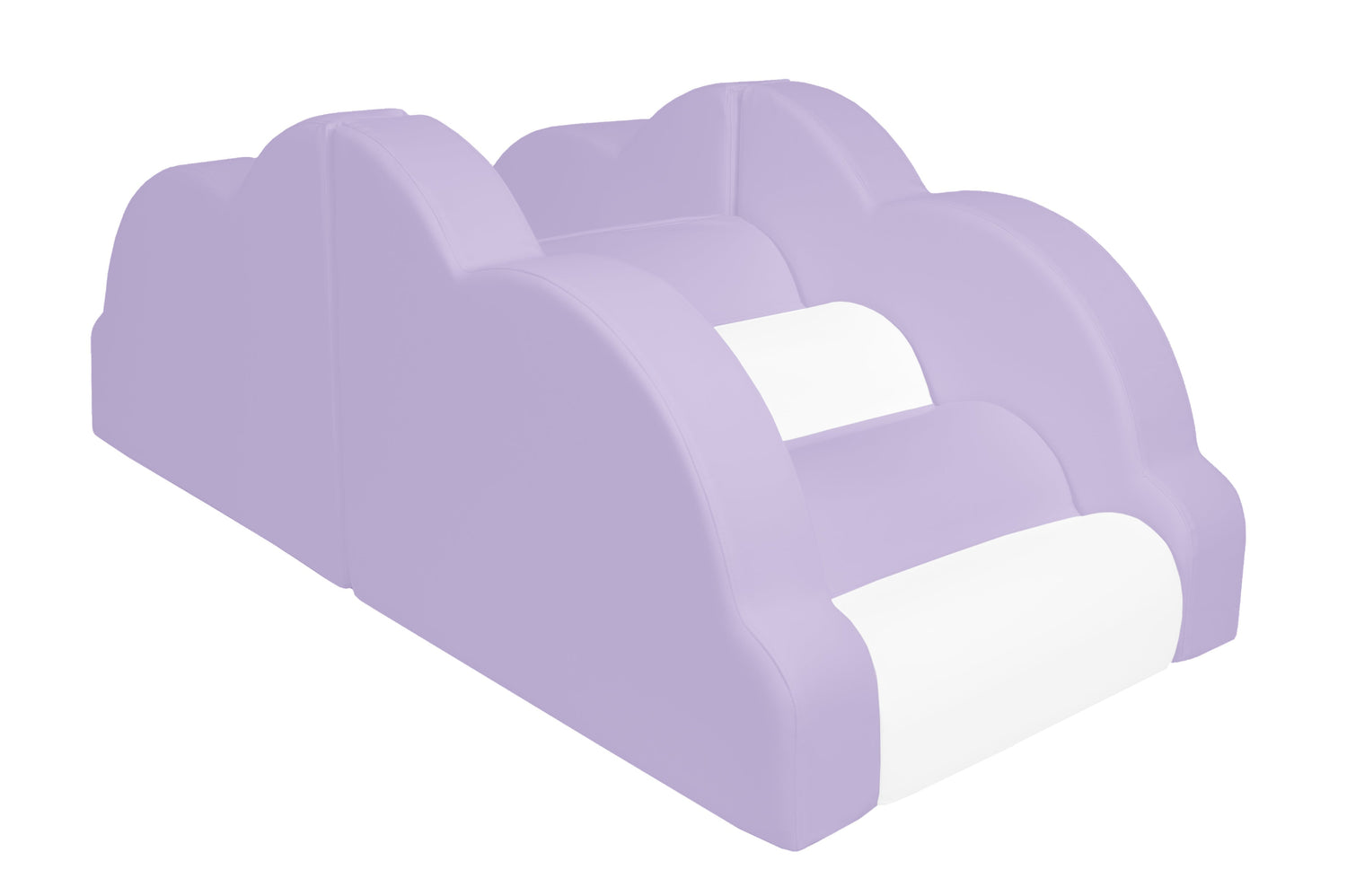
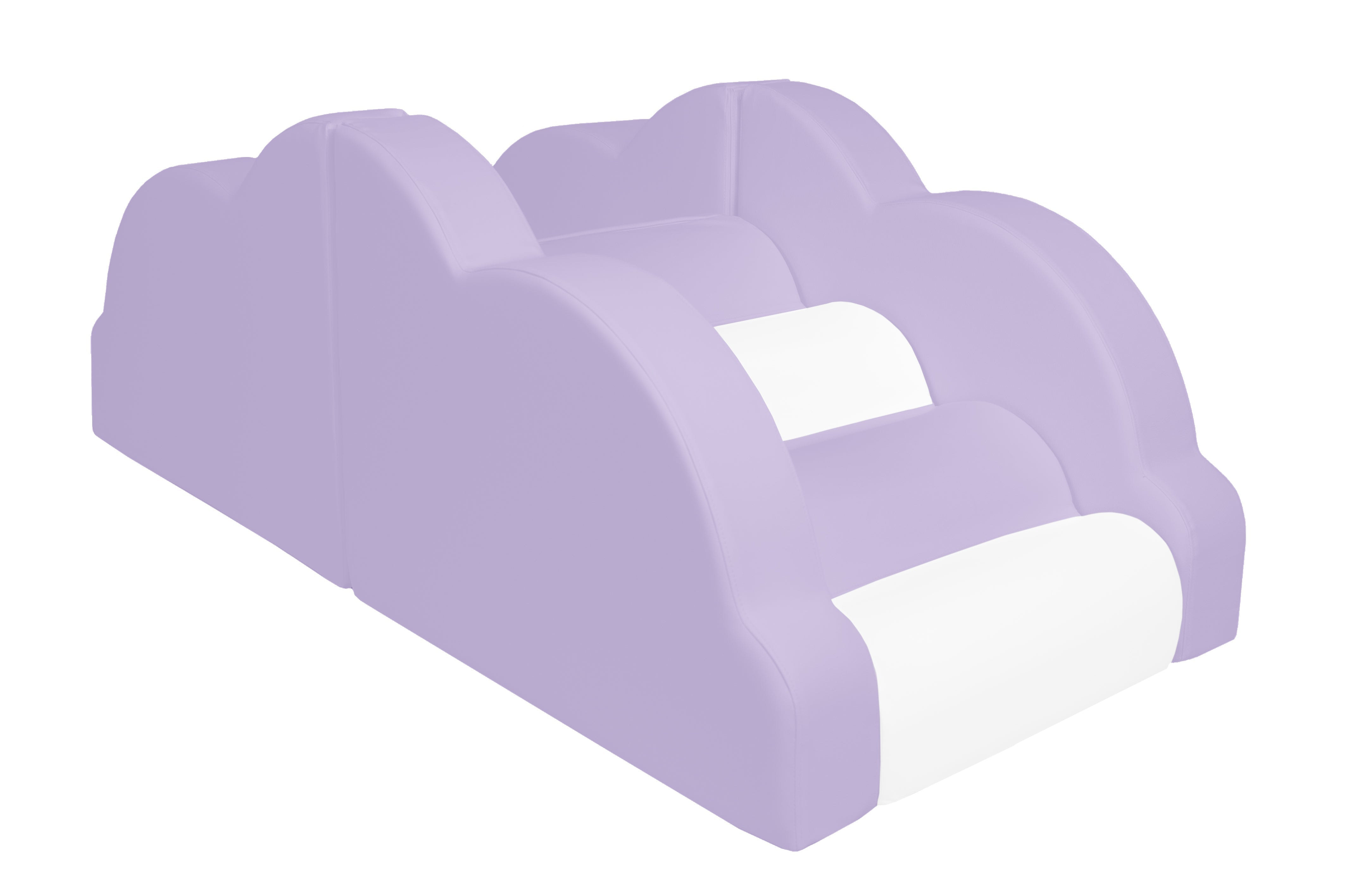
Most home sets are made from foam shapes you can rearrange: steps, wedges, blocks, tunnels, beams, and small slides. For example, Raynes Baby World Cloud Climber is described as having made of multiple foam shapes for climbing and sliding, with wipe-clean upholstery fabric and guidance to clean with a damp cloth (and not to treat it as waterproof).
That flexibility is the whole point. You can start with one gentle challenge and add more as your child’s skills change.
Age-by-age guide
0–3 months: keep it simple, keep it calm
At this stage, the goal is short bursts of floor time. Many babies don’t love being on their front at first. That’s normal.
Try:
- Chest-to-chest time when you’re fully awake, then brief floor sessions as your baby gets used to it. The NHS notes you can start tummy time from birth on your chest, then build up and move to the floor when ready.
- A rolled towel under the chest during awake play can make the position feel less demanding (only if you’re right there, watching).
- Place a high-contrast toy just within view so they have a reason to lift their head.
Soft play setup idea: a single low wedge or a firm mat surface can change the angle slightly and give a different feel, but keep everything low and stable.
3–6 months: build tolerance and strength
More head control, more arm pushing, more rolling attempts. This is when many babies start to tolerate longer front-lying sessions.
A large systematic review found tummy time is positively associated with gross motor development and “total development” measures, plus skills like moving while prone and rolling/crawling patterns.
Try:
- Several short sessions a day, rather than one long stint.
- Side-lying play (a good bridge to rolling).
- Reaching games: place a toy slightly to the side so they shift weight and reach.
Soft play setup idea: create a “little landscape” rather than an obstacle course. A low wedge and one soft block can encourage reaching and gentle weight shifts.
6–9 months: crawling routes and early climbing
Once babies become mobile, they start testing surfaces and heights. Crawling over something is often their first “I did it!” moment.
Try:
- A crawl-over route: wedge → flat → low block → flat.
- Pull-to-kneel practice: place a sturdy block in front so they can lean on it.
- Cruising prep: if they’re starting to pull up, they can practise side-steps along a low, stable surface (with you right beside them).
Soft play setup idea: keep height modest. Think “up and over” more than “up and down”. If you use a small slide shape, supervise closely and keep landings clear.
9–12 months: pulling up, cruising, safer descents
This stage often comes with lots of standing, wobbly legs, and a sudden fascination with “down”.
Try:
- Teach “feet first” early. Turn them around before stepping down.
- Practice controlled drops: a very low step down onto a soft mat.
- Simple turns: climb up one side, pivot, climb down.
Soft play setup idea: steps plus a wedge can become a tiny practice zone for climbing up and turning to descend. Keep it away from hard furniture corners.
12–18 months: walking practice and bigger confidence
Walking is new and tiring. Many toddlers also climb more once they can walk, because they can reach more interesting places.
Try:
- A “two-step” route: up one step, down one step, repeat.
- A soft “bridge” (two blocks with a gap) only if it’s stable and low.
- Short runs: a clear path to toddle along, then a soft landing zone to flop onto.
Soft play setup idea: a compact step-and-slide layout works well here, but keep slide runs short and make sure the landing area is clear. If you’re using a ball pool as a landing zone, be extra cautious about kids hanging around the exit point. US safety guidance for soft contained play equipment flags collisions at slide exits into ball pools as a known hazard pattern.
18–24 months: obstacle courses with rules
Now you can start adding simple “games” and boundaries. Toddlers love repetition, so you can get a lot of value out of one layout.
Try:
- “One at a time” practice if you have siblings.
- A two-minute course: climb → sit → slide → walk back.
- Throw-and-fetch: toss a soft ball to the end of the course and have them carry it back.
Soft play setup idea: widen the course rather than building it taller. Extra width reduces tumbles and keeps it more manageable indoors.
2–4 years: more challenge, more imagination
Preschoolers can handle longer sessions and more complex movement patterns. They also respond well to play that has a story attached, without needing you to put on a performance.
Try:
- Colour challenges: “Step only on the grey block.”
- Balance practice: a low beam between two blocks (very low, on a grippy surface).
- “Delivery jobs”: carry a toy from one end to the other.
Soft play setup idea: rotate layouts rather than buying more pieces. A small change can make it feel new.
Safety and setup tips that actually make a difference
Choose the right spot
- Use a flat surface with good grip. If you’re on a hard floor, a non-slip mat underneath helps.
- Give yourself a clear boundary: a wall on one side is easier than a course floating in the middle of the room.
- Keep it away from stairs, fireplaces, sharp furniture edges, and windows.
RoSPA’s home safety advice includes basics like fitting safety gates at stairs and using window restrictors so upstairs windows can open for ventilation without creating a fall risk.
Supervision is not optional for babies and young toddlers
Soft surfaces reduce impact, but they don’t remove risk. If a baby rolls awkwardly or a toddler tries a leap, you want to be close enough to intervene quickly.
Don’t use soft play for sleep
This is worth being blunt about: play equipment is for awake time. The Lullaby Trust safer sleep advice emphasises a clear sleep space, with no pillows, duvets, soft toys, wedges or sleep-positioning products.
Reduce “container time” in the day
If your baby spends a lot of waking time in car seats, bouncers, and high chairs, soft play can be a practical way to increase free movement time. Public health guidance linked to the WHO recommendations includes the idea of avoiding restraint for more than an hour at a time during waking hours.
What to look for when choosing a set
If you’re picking a set for home use, focus on basics that match real life:
- Stability: pieces that don’t slide around easily.
- Cleanability: you’ll wipe it down a lot. Some Raynes Baby World soft play sets can be wipe-cleaned with a damp cloth, with clear notes about not washing the fabric and not treating it as waterproof.
- Right shapes for your child: crawlers benefit from wedges and low blocks; walkers benefit from steps and gentle slopes.
- Safety labelling and conformity: In Great Britain, toys must meet essential safety requirements under the Toys (Safety) Regulations 2011, with guidance covering conformity assessment and UKCA/CE marking routes.
For a closer look at safety, materials, size, and age suitability, read our guide on what to look for in a baby soft play set.
For more practical care advice, read our guide on how to clean soft play, ball pools and inflatables so you know what to check before and after regular use.
Keeping it looking good (and lasting longer)
A practical perk with modular sets is that you can refresh the look without replacing the foam.
Raynes Baby World sells replacement covers for some sets (the Maxi Step and Slide covers are offered for individual parts or the whole set). That can be useful if you want a new colour scheme, or if one piece gets more wear than the rest.
Quick FAQs
1. When can my baby use soft play?
From birth, babies can benefit from supervised floor play, including short tummy time sessions. Use soft play very simply early on: low, stable surfaces and gentle angles, not climbing layouts.
2. How long should we do it each day?
The NHS suggests aiming for at least 30 minutes of tummy time spread throughout the day for babies who aren’t yet mobile. For toddlers and preschoolers, the guidance shifts towards hours of varied activity across the day.
3. Is a slide safe indoors?
It can be, if it’s low, stable, and you keep the landing zone clear. Teach “feet first” early and avoid crowding. If you use a ball pool with a slide, manage the exit area so children don’t linger where they might get bumped.
4. Do I need a huge set?
Not really. A small set you use often beats a large set that’s too awkward to get out. Rearranging a few pieces changes the challenge level and keeps things interesting.
5. A simple way to start this week
If you want an easy starting point, set up one low route (wedge + step + clear landing), keep sessions short, and repeat it daily for a week. Watch what your child tries to do next, then adjust the layout to meet them there.


Leave a comment
This site is protected by hCaptcha and the hCaptcha Privacy Policy and Terms of Service apply.