
New walking changes family life quickly. Between 12 and 18 months, many toddlers move from supported steps to more independent walking, though each child follows their own timetable. The CDC lists walking as a common 15-month milestone, and experts advise parents to seek advice if a child is not walking independently by 18 months.
Soft indoor play gives new walkers a forgiving place to practise. It uses mats, cushions, tunnels and familiar toys to build balance and body control. The aim is not to rush development. It is to make movement safe, playful and repeatable.
Why soft play suits early walkers
Toddlers learn through repetition. They stand, wobble, fall, recover and try again. A cushioned play area makes that pattern less alarming.
These first-step activities also sit within a wider pattern of movement milestones, from tummy time and rolling to crawling, cruising and walking, which is covered in our guide, From Tummy Time to First Steps: An Age-by-Age Guide to Soft Play for Baby and Toddler Development (Plus Safety + Setup Tips)
Good indoor movement play can help a toddler:
- Practise stepping on firm but varied surfaces
- Move from crawling to standing and back again
- Strengthen legs, feet and core muscles
- Learn how to stop, turn and squat
- Gain confidence without pressure
The American Academy of Pediatrics encourages structured and unstructured active play for toddlers, as these support large motor skills and coordination. Soft play allows free exploration alongside simple adult-led games.
Setting up a safer indoor play space
Falls are part of learning to walk, but the surroundings matter. Under-fives are especially at risk of home accidents, with falls making up most non-fatal accidents.
Before starting, look around from toddler height. Check for corners, loose rugs, hard edges, cords and small items that could be swallowed.
A useful set-up includes:
- A firm, non-slip play mat
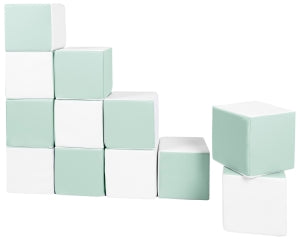
- Low soft blocks or stable cushions
- Three to six clear toddler steps
- Covered furniture corners
- No hot drinks, trailing wires or small toys nearby
- Close adult supervision, especially around climbing
For this age group, simple is better. A crowded course can confuse a wobbly walker.
Gentle play activities for new walkers
1. Cushion path walking
Place two or three firm cushions or foam tiles in a short line. Hold your toddler’s hand and encourage them to step from one to the next. The cushions should not be so soft that your child sinks or twists.
2. Toy-to-toy toddling
Put a favourite teddy, ball or stacking cup a few steps away. When your toddler reaches it, move another toy slightly further along the mat. Two confident steps are more useful than ten frustrated ones.
3. Soft block step-overs
Use a rolled towel, low foam block or small cushion as a mini obstacle. Help your child step over it, then praise the effort. This teaches leg lifting and awareness of objects on the floor.
4. Tunnel crawl and stand
Place a toy at the exit of a fabric tunnel. Invite your child to crawl through, then pull to stand using a stable sofa or your hands. This links crawling, standing and walking.
5. Parent-to-parent steps
Two adults sit on the floor, facing each other, just an arm’s length apart. The toddler walks between them. Increase the gap only while your child stays relaxed.
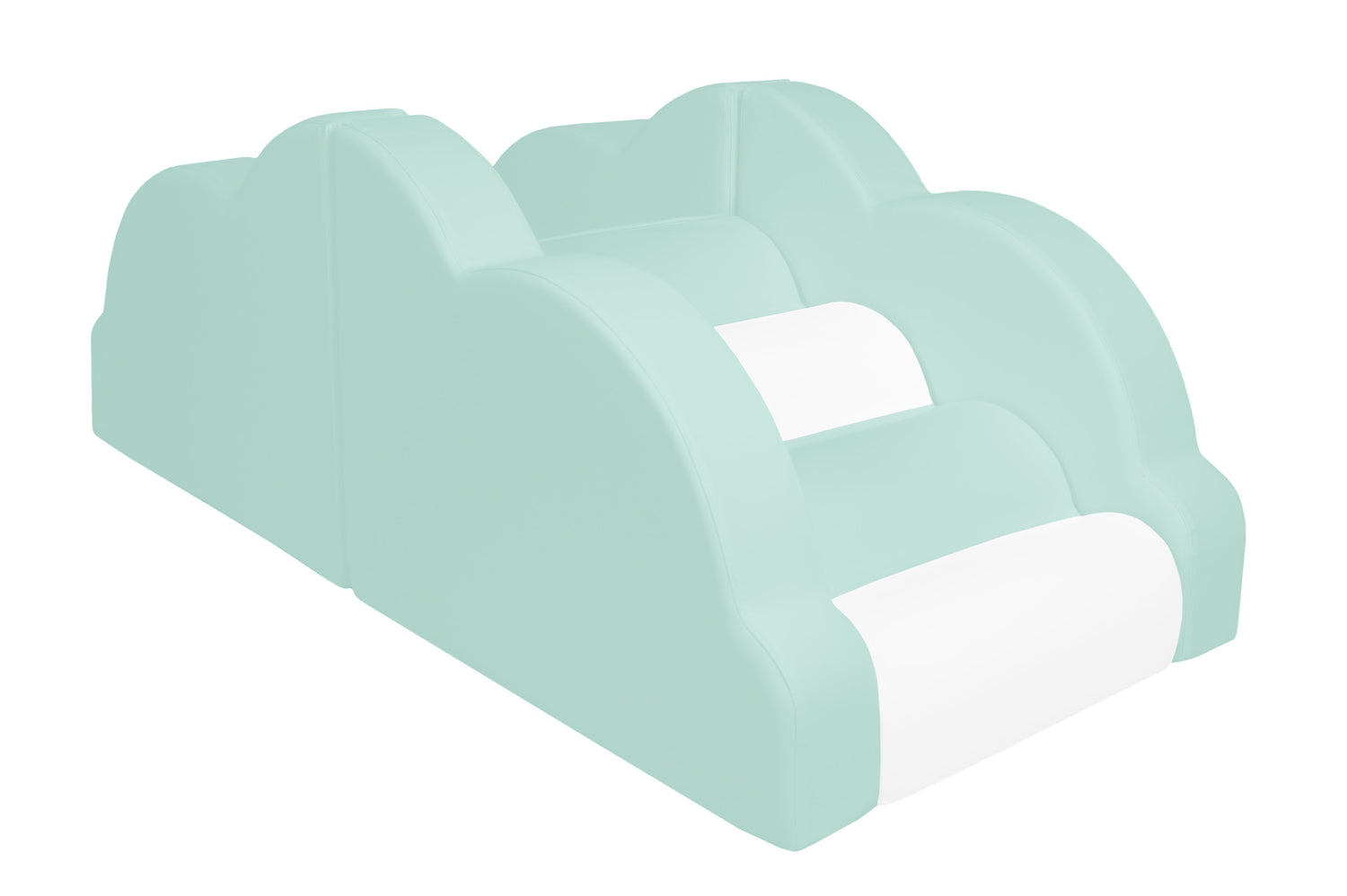
6. Low climb and slide
Use a soft wedge, play couch cushion or foam ramp no higher than your toddler can manage safely. Support them as they climb up, turn, sit and slide down.
Small-space walking games
A hallway, living-room corner or bedroom floor can work if the space is clear.
Try these quick ideas:
- Walk to the basket: carry one soft toy to a basket.
- Follow the scarf: trail a light scarf slowly.
- Step and clap: take two steps, clap, then repeat.
- Music pause: walk together, then stop when the music stops.
- Ball roll: roll a soft ball and encourage your child to fetch it.
Ten minutes of happy practice beats half an hour of tired stumbling.
Choosing soft play items for 12 to 18 months
Parents do not need a house full of equipment. A few pieces can support many games.
|
Item |
Useful for |
|
Non-slip foam mat |
Everyday floor practice |
|
Low soft blocks |
Stepping, stacking and climbing |
|
Fabric tunnel |
Crawling and standing transitions |
|
Soft ball |
Squatting, reaching and walking |
|
Firm play cushion |
Low climbing and sliding |
Choose items that feel firm, wipe clean easily and suit the room you actually have.
Common mistakes to avoid
Indoor movement play should feel relaxed. Problems usually appear when the activity is too hard or the area has not been checked.
Avoid:
- Expecting steady walking too soon
- Using slippery blankets on wooden or tiled floors
- Placing obstacles too close together
- Letting toddlers climb adult furniture as part of the game
- Comparing one child’s walking with another’s
- Continuing when your child looks tired or upset
A simple 15-minute indoor routine
- 2 minutes: crawl or roll a soft ball
- 4 minutes: walk across a mat towards a toy
- 3 minutes: step over one low cushion or towel
- 3 minutes: crawl through a tunnel and stand
- 3 minutes: finish with a calm basket game or cuddle
Frequently Asked Questions:
What indoor games help toddlers who have just started walking?
Try walking between two adults, carrying a teddy to a basket, stepping over a rolled towel or following a slow-moving scarf. Keep the surface soft, non-slip and clear.
Are soft play activities safe for a 12-month-old?
They can be safe with close adult supervision and a low, stable, hazard-free set-up. Use firm mats, avoid small loose parts and keep climbing near the floor.
How long should a new walker practise indoors?
Many toddlers manage 10 to 15 minutes. Stop sooner if your child becomes fussy, falls repeatedly or refuses to stand. Short bursts often work better.
What equipment is useful for early walking practice?
A non-slip foam mat, low soft blocks, a fabric tunnel, soft ball and firm cushion cover most needs. Choose pieces that work in several ways.
Should I worry if my 18-month-old is not walking alone?
Children develop at different rates, but experts advise speaking to a health visitor or family nurse if a child is not walking independently by 18 months.
Gentle indoor play can turn first steps into calm practice. Keep the space soft, the games short and the tone encouraging. Progress often comes from ordinary moments: reaching for a toy, stepping towards a parent, climbing onto a low cushion, then trying again tomorrow.


Leave a comment
This site is protected by hCaptcha and the hCaptcha Privacy Policy and Terms of Service apply.