
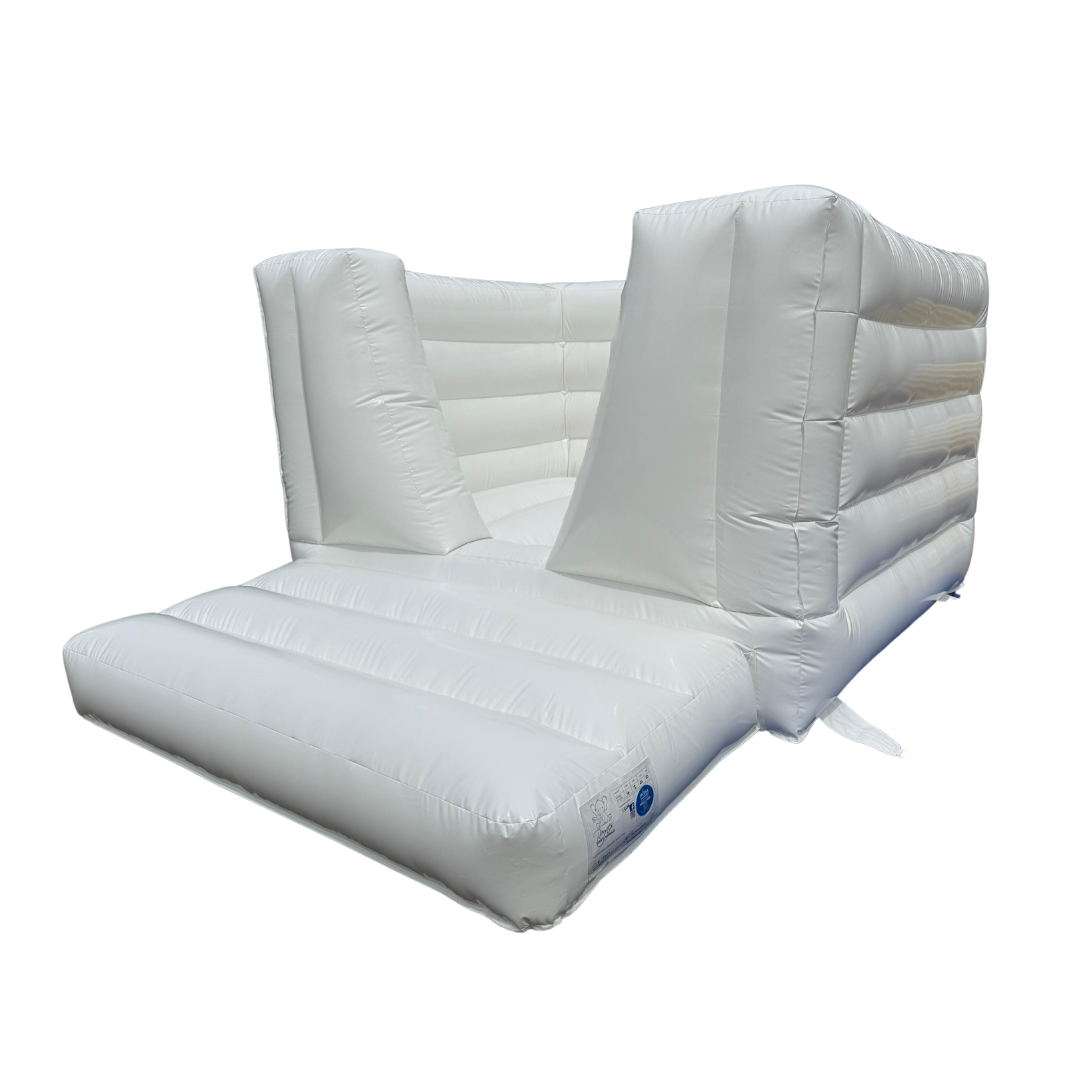
A bounce castle can turn an ordinary afternoon into something children talk about for weeks. It can also become a headache if you buy one that’s poorly made, awkward to set up, or simply not suited to the age group using it. This guide focuses on kids bounce castle safety: the practical checks that help you choose an inflatable that’s enjoyable, manageable, and designed with real-world risks in mind.
Start with proof, not promises:
When you shop online, it’s easy to get distracted by bright colours and big claims. Step back and look for the less exciting details first: the markings and documents that show the product has been assessed against safety requirements.
For toys placed on the Great Britain market, the UK’s Toy Safety rules set out what manufacturers and importers must do, including applying the UK conformity marking where it’s required. Parents should always check for UKCA/CE marks as part of safer toy buying.
What to look for before you click “buy”:
- Clear labelling with the maker or UK importer’s name and address
- Age grading that matches your child, not “one size fits all”
- Written instructions for set-up, use, and storage (a proper manual, not a vague flyer)
- A stated maximum user weight and maximum number of users
- If a blower is included, electrical information (rating plate, warnings, and safe-use instructions)
Many “bouncy castles” you hire for events are treated as inflatable play equipment and are often inspected against recognised industry standards and schemes (you’ll see this in hire companies’ paperwork). For a home unit, you may not get the same inspection documents, but you should still expect clear manufacturer details, safety instructions, and sensible limits.
Choose the right size and age fit (bigger isn’t always better)
Most mishaps at home come from a mismatch: a product that’s too lively for toddlers, too small for older children, or placed in a space that forces kids to brush against walls and furniture.
Start with the user group:
- Under 3s: Look for lower walls, a smaller bounce area, and a gentler “rebound”
- Mixed ages: Consider separate play sessions rather than squeezing everyone in
- Older children: Space matters more than height; crowding leads to collisions
If you’re searching for a baby bounce castle in the UK, treat the “baby” label as a starting point, not a guarantee. Check that the entrance is low enough for safe crawling in and out, and that the bounce is controlled rather than springy. Also measure your room properly: you need space for the inflatable and a clear safety buffer around it.
A tip: allow at least a metre of clear space on all sides where possible. If you can’t, choose a smaller model rather than forcing a larger one into a tight area.
Materials and build quality that hold up to real play
A good inflatable should feel consistent and sturdy, not thin, papery, or overly stretchy. You don’t need to be a materials expert; you just need to know what “solid” feels like.
Checks that help:
- Seams: Look for neat stitching and reinforced joins where stress builds up (corners, entry points, and wall bases)
- Surface: A non-slip bounce floor reduces skids when children land awkwardly
- Repairs: See if the seller provides patches and clear instructions for small punctures
- Venting: Safe products deflate in a controlled way rather than collapsing suddenly with normal movement
Design matters too. A sensible inflatable uses mesh sidewalls so adults can supervise easily and children don’t tumble out during excited play. Those netted panels also help airflow, which makes indoor use less stuffy.
Stability comes from proper anchoring, even in the garden
If you plan to use an inflatable outdoors, anchoring isn’t optional. It’s the basic step that stops a fun purchase becoming a serious hazard.
The UK safety regulator suggests that all anchor points should be used. Even if you’re buying for family use rather than hire, that advice still applies.
When comparing models, check for:
- Multiple anchor points that are built into the structure (not add-ons)
- Strong, well-attached rings or loops (not flimsy fabric tabs)
- Clear instructions that explain where each anchor should go
- A supplied anchoring kit and tie-down points that match the size of the inflatable
If your garden surface makes pegging difficult, don’t improvise with whatever is lying around. Use suitable weights that won’t shift, and follow the manufacturer’s guidance. If the instructions don’t cover safe alternatives, that’s a warning sign in itself.
Blowers and electrics: keep the “invisible” risks in view
For many families, the blower is the least considered part of the purchase. In practice, it’s the part most likely to introduce avoidable hazards: trailing cables, damp conditions, and unsuitable extension leads.
Use a suitable Residual Current Device (RCD) as part of safer set-up.
Look for:
- A blower with guards over air intakes and outlets
- A cable length that suits your space (to reduce long runs across walkways)
- Clear advice on using an RCD and appropriate outdoor-rated extension leads
- Sensible placement guidance so children can’t reach the blower while playing
At home, keep the cable route tidy and predictable. If children are running around it, accidents happen fast.
Weather and wind: know the limits before you inflate
Wind is the big one. It doesn’t need to feel like a storm to create problems, especially with larger inflatables.
According to the experts, no inflatable should be used in winds above 24 mph (38 km/h), roughly Force 5 on the Beaufort Scale. Some devices may have lower limits depending on the manual.
For a family garden set-up:
- Don’t rely on “it feels fine”
- Avoid using an inflatable in gusty conditions, even if it seems calm between gusts
- Stop play if the unit shifts, tilts, or the bounce becomes unstable
- Keep water in mind too: wet surfaces and electrics are a bad mix
If you only plan to use your inflatable indoors, you can ignore wind, but you still need stable placement and clear surroundings.

Day-to-day use rules that prevent most injuries
Even a well-made bounce castle can be used badly. The safest approach is boring in the best way: clear rules, steady supervision, and not trying to turn it into an all-day free-for-all.
Good household rules:
- One age group at a time if there’s a wide gap (toddlers and older children don’t mix well on a bouncy surface)
- No flips, wrestling, or climbing on the walls
- Shoes off, sharp objects out of pockets, no food or drink inside
- A calm “on and off” routine so children aren’t leaping in and out
Supervision means staying close enough to step in quickly, not shouting from the kitchen while the kettle boils. If you’re hosting a birthday, assume the energy level will double and set stricter limits than you would for everyday play.
Cleaning, storage, and knowing when it’s time to replace
Inflatables live a hard life: warm air, sweat, crumbs, and sometimes a damp garden. A bit of routine care keeps the surface hygienic and helps you spot small problems before they grow.
A simple approach that works for most home units:
- Wipe down with a mild cleaner after heavy use
- Dry fully before storage to prevent mould
- Check seams, anchor points, and the bounce floor regularly
- Keep repair patches handy and don’t ignore slow leaks
If you notice worsening tears, failing seams, or a unit that won’t hold shape reliably, retire it. Repairs are fine for small punctures; they’re not a fix for structural wear.
Ready to update the play corner with something active and practical? See our range and find an option that suits toddlers, older children, or both.
Frequently Asked Questions:
1) What checks should I do on delivery before letting children play?
Unpack it fully and inspect seams, entry points, and anchor loops for weak stitching or damage. Inflate it once without children, and watch how it holds shape for 10–15 minutes. Confirm the stated maximum users and weight limit are printed clearly. If the manual is missing or vague, contact the seller before first use.
2) Is an inflatable safe for toddlers indoors?
It can be, if it’s sized for the room and designed for younger children. For an indoor baby bouncy castle in the UK, look for low walls, a gentle bounce, and a stable base. Clear the area around it, use a soft mat outside the entrance, and keep sessions short. Toddlers tire quickly and coordination drops off fast.
3) How do I anchor a bounce castle safely in my garden?
Use every built-in anchor point and follow the manufacturer’s instructions. UK safety advice stresses using all anchor points and suitable ground stakes. If your surface doesn’t allow stakes, use proper weights that won’t slide, and stop if the unit shifts during play.
4) What wind speed is too high for outdoor use?
UK safety guidance says inflatables should not be used in winds above 24 mph (38 km/h), around Force 5, and some models may have lower limits in their manual. If the weather is gusty, play can become unpredictable even when the average wind seems low. When in doubt, deflate and pack away.
5) What should I do if the blower feels hot or the cable looks worn?
Stop using it and unplug it immediately. Don’t tape over damaged insulation or keep running a blower that smells hot. The Health and Safety Executive has raised electrical safety concerns around inflatable blower fans, especially where conditions are wet or equipment is poorly maintained. Replace the blower or seek advice from the seller.

Leave a comment
This site is protected by hCaptcha and the hCaptcha Privacy Policy and Terms of Service apply.